
After your baby is born, a small stump remains where the umbilical cord is cut. This stump needs proper care to heal well and prevent infection. Umbilical cord care is simple when you know the basics.
.jpg)
When your baby is born, the doctor clamps and cuts the umbilical cord. This leaves a stump attached to your baby's belly button. The stump is half an inch to one inch long. At first, it looks shiny, yellow or white. As it dries, it turns brown, grey, or bluish-purple. It shrivels and turns black before falling off on its own. The cord has no nerves, so your baby does not feel any pain from it. The stump falls off between 1 and 3 weeks after birth. Most cords come off around 10 to 14 days.
The most important rule is keeping the stump dry. Dry cord care is now standard practice in hospitals. Just let it dry naturally. Skip tub baths and give your baby sponge baths until the stump falls off. Use a soft cloth dipped in warm water. Wipe your baby's skin gently, avoiding the cord area. If the cord gets wet, pat it dry right away with a clean cloth.
Let air circulate around the umbilical cord. This helps it dry faster. Dress your baby in loose clothing so that it doesn't press on the cord.
If using diapers, keep them folded below the cord stump. This keeps urine away from the area. Some newborn diapers have a cut-out section for the cord. If yours doesn't, fold the front down below the navel.
If urine or stool gets on the cord during a diaper change, clean it gently. Use plain water and a soft cloth. Pat the area dry afterwards. Don't scrub hard.
Check the cord daily for signs of infection. Look at the colour of the stump and the skin around it. Notice any discharge or bad smells and check with your doctor immediately.
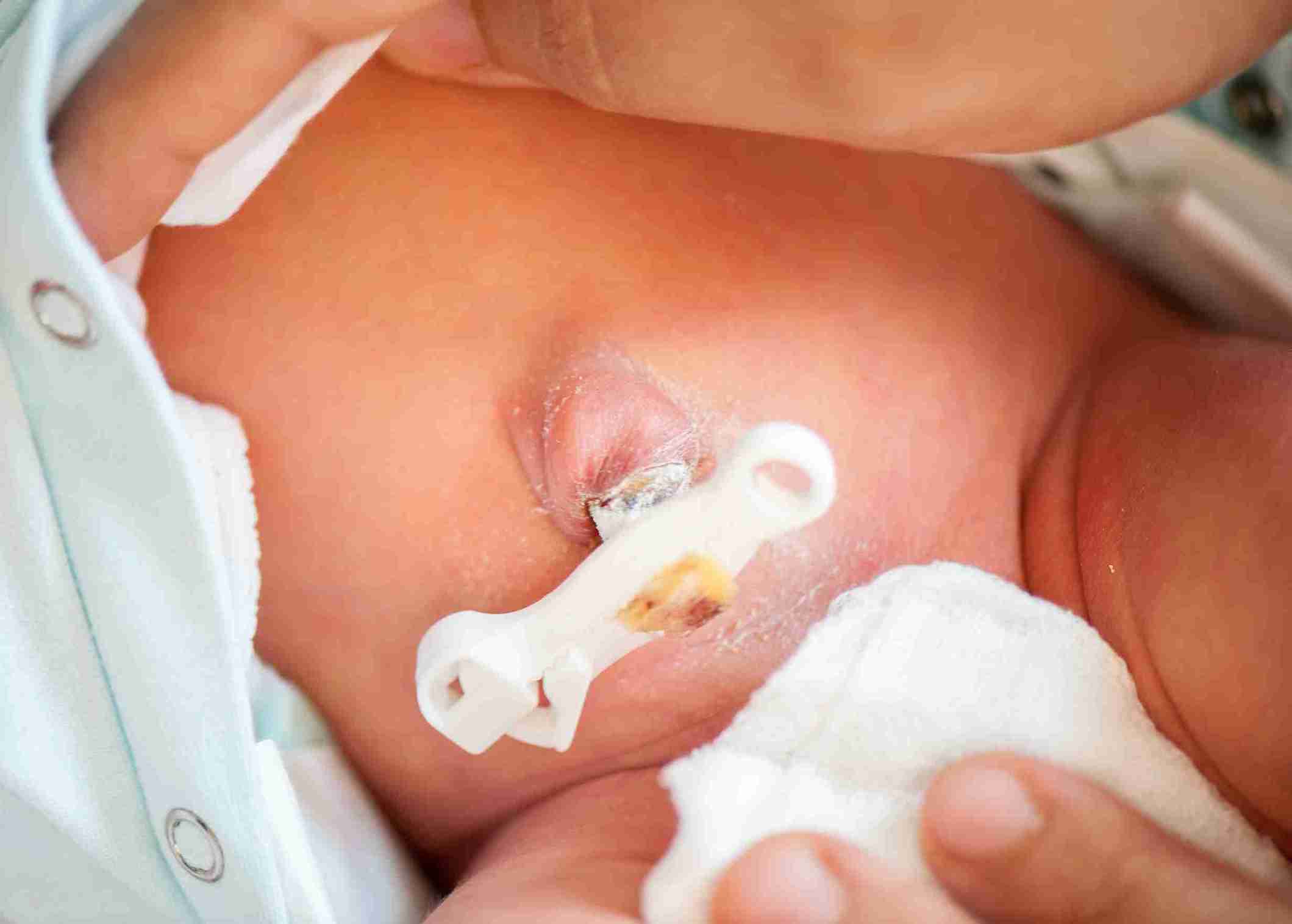
Never pull or tug the umbilical cord, even if it looks ready to fall off. Let it come off by itself. Pulling it can cause bleeding and increase infection risk.
Don't put bandages, gauze, or tape over it. The cord needs air to dry. Covering it traps moisture and bacteria.
Alcohol is not recommended. It can delay healing and is not needed for baby navel care.
Do not apply any lotions, oils, powders, or creams in the cord area.
It is advisable to avoid tub baths until the cord falls off and the navel heals completely.
Watch for these warning signs:
Redness: Red or discoloured skin around the stump's base. On darker skin, feel for warmth.
Swelling: The area around the navel looks puffy.
Discharge: Thick green or yellow fluid oozes from the cord area.
Bad smell: A foul odour comes from the cord or navel area.
Bleeding: More than a few drops of blood, or bleeding that does not stop.
Pain: Your baby cries with pain when you touch the cord or the skin around it.
Fever: If your little one has a temperature of over 100.4°F (38°C).
Behavioural changes: Your baby becomes tired, feeds poorly, or seems irritable.
Call your doctor right away if you notice any of these signs.
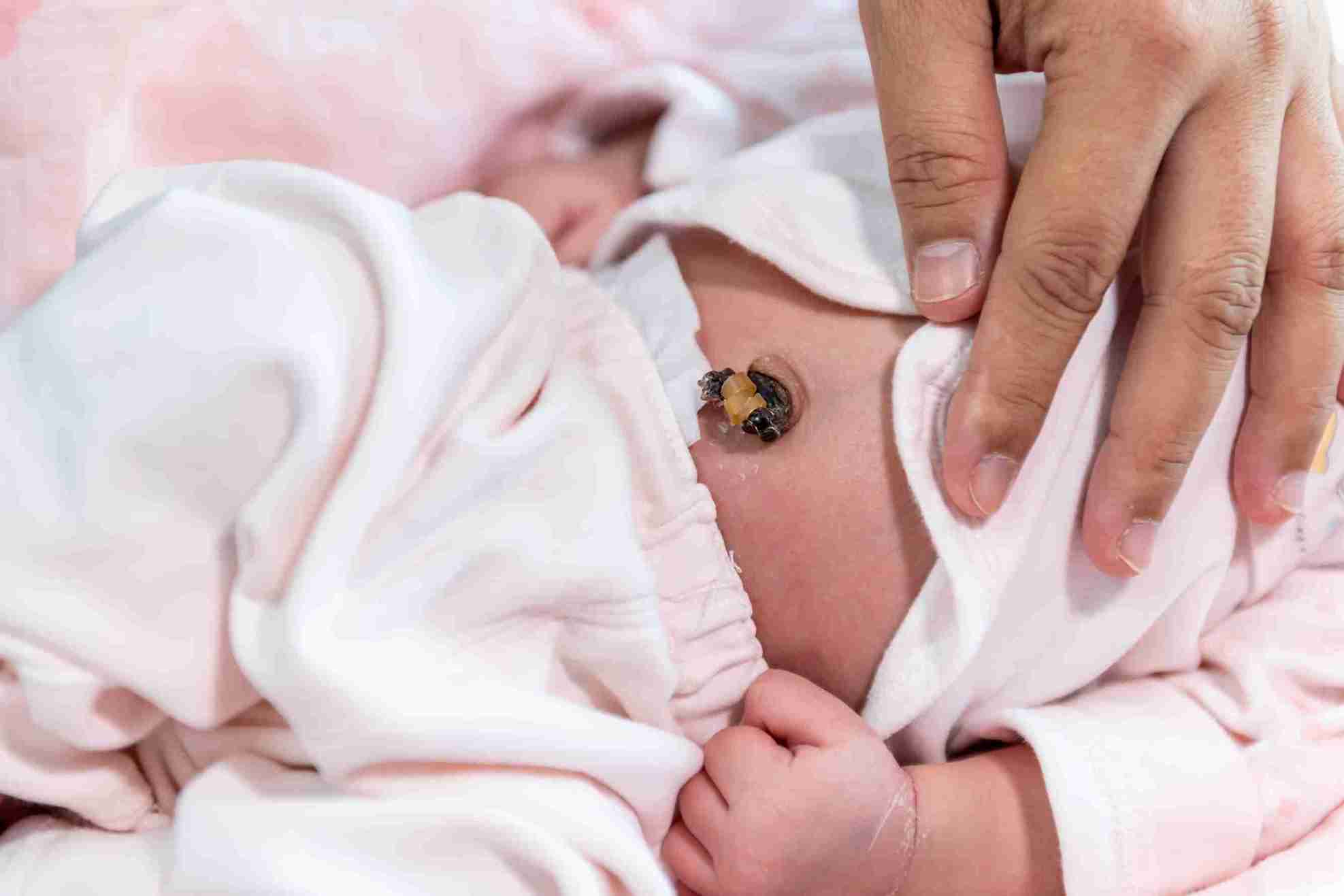
When the stump falls off, you might see a raw, red spot on your baby's belly. This is normal. A small amount of fluid may ooze out. This fluid might be tinged with blood.
The area should heal and dry within two weeks. Continue keeping the navel clean and dry. You can start giving tub baths once the area heals.
Sometimes pink scar tissue forms after the cord falls off. This is called an umbilical granuloma. It looks like a small, moist, red or pink lump on the navel. The granuloma may drain a yellowish fluid. Most granulomas go away on their own within a week. If it lasts longer or gets bigger, see your doctor.
You might notice a bulge near your baby's belly button when they cry or strain. This is called an umbilical hernia. It happens when a small part of the intestine pokes through a small gap in the muscles in the abdominal region. Umbilical hernias in newborns are common and are not considered a serious threat. Most heal on their own by 12 to 18 months.
Contact your baby's doctor if:
The cord hasn't fallen off after 3 to 4 weeks
You see signs of infection (redness, pus, bad smell, swelling)
Bleeding continues for more than a few drops
The navel doesn't heal within 2 weeks after the cord falls off
A red lump on the navel lasts more than 2 weeks
When you have any concerns about the healing process

Umbilical cord care is simple. Keep the stump clean and dry. Fold diapers below the cord. Give sponge baths until it falls off. Don't pull, cover, or apply products to the area. Watch for infection signs and call your doctor if you're worried. With proper baby navel care, the stump will fall off on its own within a few weeks.

A few drops of blood are normal when the stump falls off or if the diaper rubs against it. Small amounts of blood-tinged fluid after the cord drops off are also normal. However, active bleeding where drops keep appearing or bleeding that soaks diapers is not normal. Call your doctor if bleeding doesn't stop with gentle pressure or continues beyond a few drops.
Signs of infection include red or warm skin around the stump, thick yellow or green discharge, bad smell, swelling around the navel, bleeding that won't stop, and your baby crying when you touch the area. Your baby might also have a fever over 100.4°F, feed poorly, seem tired, or be fussy. Contact your doctor right away if you see these signs.
Yes, diapers rubbing against the cord can cause irritation and minor bleeding. This is why you should fold diapers below the stump or use newborn diapers with a cord cut-out. Rubbing can also slow healing by keeping the area moist with urine. Keep the diaper positioned below the navel until the cord falls off and heals.
After the cord falls off, you will see a raw, red spot on your baby's belly. A small amount of clear or blood-tinged fluid may ooze out for up to two weeks. This is normal. Keep the area clean and dry. You can start tub baths once it heals. Sometimes a pink lump called a granuloma forms, which goes away on its own.







 Best Gynecologists in Bellandur Best Gynecologists in Electronic City Best Gynecologists in HRBR LayoutBest Gynecologists in Jayanagar Best Gynecologists in Kanakapura RoadBest Gynecologists in Malleswaram Best Gynecologists in Nagarbhavi Best Gynecologists in Old Airport RoadBest Gynecologists in Sahakarnagar Best Gynecologists in Sarjapur RoadBest Gynecologists in ThanisandraBest Gynecologists in Varthur RoadBest Gynecologists in Whitefield Best Gynecologists in Industrial Area Phase IIBest Gynecologists in OMRBest Gynecologists in T NagarBest Gynecologists in New Industrial TownBest Gynecologists in IndirapuramBest Gynecologists in Golf Course RoadBest Gynecologists in Sector 14Best Gynecologists in Sector 47Best Gynecologists in Banjara HillsBest Gynecologists in GachibowliBest Gynecologists in Hitech CityBest Gynecologists in KompallyBest Gynecologists in Gomti NagarBest Gynecologists in MaladBest Gynecologists in NerulBest Gynecologists in VashiBest Gynecologists in Kailash ColonyBest Gynecologists in PatparganjBest Gynecologists in Punjabi BaghBest Gynecologists in VikaspuriBest Gynecologists in Gaur CityBest Gynecologists in Pari ChowkBest Gynecologists in Sector 51Best Gynecologists in Sector 5 Swastik ViharBest Gynecologists in Kalyani NagarBest Gynecologists in SB RoadBest Gynecologists in Pimple SaudagarBest Pediatricians in BellandurBest Pediatricians in Electronic CityBest Pediatricians in HRBR LayoutBest Pediatricians in JayanagarBest Pediatricians in Kanakapura RoadBest Pediatricians in MalleswaramBest Pediatricians in NagarbhaviBest Pediatricians in Old Airport RoadBest Pediatricians in SahakarnagarBest Pediatricians in Sarjapur RoadBest Pediatricians in ThanisandraBest Pediatricians in Varthur RoadBest Pediatricians in WhitefieldBest Pediatricians in Industrial Area Phase IIBest Pediatricians in OMRBest Pediatricians in T NagarBest Pediatricians in New Industrial TownshipBest Pediatricians in IndirapuramBest Pediatricians in Golf Course RoadBest Pediatricians in Sector 14Best Pediatricians in Sector 47Best Pediatricians in Hitech CityBest Pediatricians in Banjara HillsBest Pediatricians in GachibowliBest Pediatricians in KompallyBest Pediatricians in Gomti NagarBest Pediatricians in MaladBest Pediatricians in NerulBest Pediatricians in VashiBest Pediatricians in Kailash ColonyBest Pediatricians in PatparganjBest Pediatricians in Punjabi BaghBest Pediatricians in VikaspuriBest Pediatricians in Gaur CityBest Pediatricians in Pari ChowkBest Pediatricians in Sector 51Best Pediatricians in Sector 5 Swastik ViharBest Pediatricians in Kalyani NagarBest Pediatricians in SB RoadBest Pediatricians in Pimple Saudagar


